

“Fasting is the greatest remedy — the physician within.”
— Paracelsus
Fasting, defined as a period of partial or total food restriction, is an ancient healing strategy rooted in various cultural, religious, and health traditions. This practice poses a challenge for the brain, triggering an adaptive stress response that can potentially reduce the risk of diseases such as diabetes and cancer. The transition to the “fasted state” typically occurs within 12-24 hours, influenced by metabolic health and the size of the last meal. During this phase, the body shifts from processing incoming nutrients to burning stored energy, a process known as catabolism. In metabolically flexible individuals, stored glycogen and triglycerides become efficient fuel sources. Conversely, metabolic dysfunction diminishes the ability to burn stored fat, resulting in strong cravings, low blood sugar, and irritability.
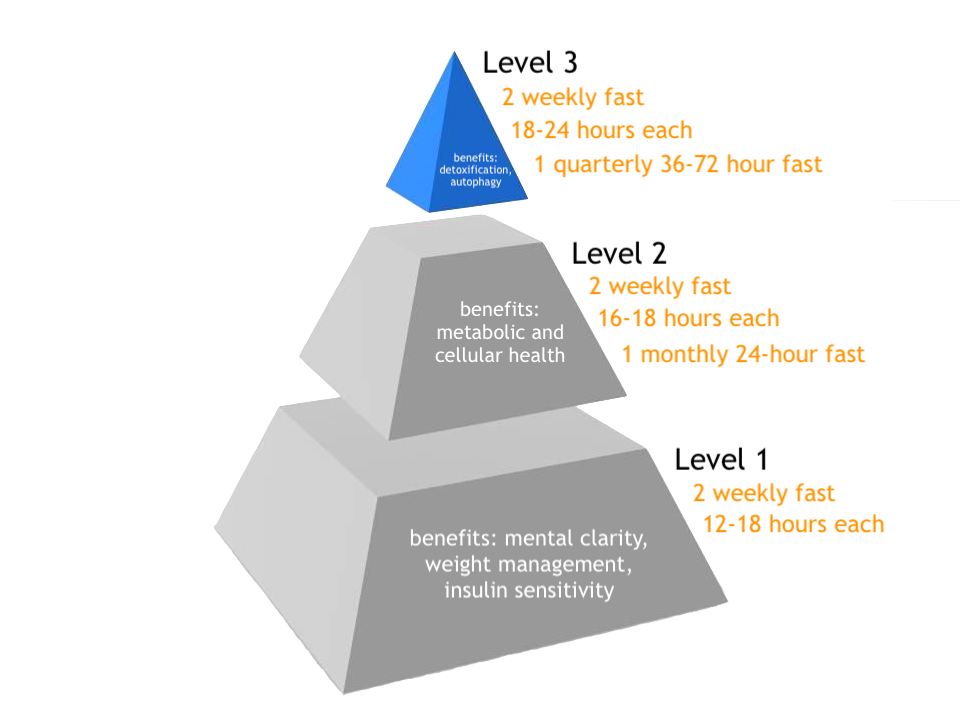
It’s crucial to recognize that fasting, akin to exercise, requires an adjustment period, typically a few weeks for the body to acclimate. As you persist with fasting, your ability to endure longer periods without food will improve, aiming for the achievement of a monthly 24-hour fast.
Exploring various fasting styles is recommended to discover personal preferences. Intermittent fasting (IF) is a widely-used term, denoting time-restricted feeding on a fixed schedule. A standard fasting approach involves restricting feeding between 12 pm and 8 pm at least 5 days a week. Our recommendation is doing two 18+ hour fast per week and doing a 24 hour fast once a month, occasionally extending to 36 hours (4-12 times a year), and challenging mental boundaries with a 48-72 hour fast every couple of years.
Fasting stands out as a potent tool, offering numerous health benefits. Allowing the digestive system to rest provides an opportunity for the body to clean up and repair cellular debris. Key advantages include enhanced insulin sensitivity, improved digestion, elevated energy levels, mental clarity, reduced risk of heart disease, weight loss, and decreased inflammation, measured by C-Reactive Protein. Recent studies even suggest that fasting may potentially slow down aging, increasing the likelihood of a prolonged and healthy lifespan.
Protocol for Breaking a Fast
Implementing this protocol when breaking a fast will help you reap even more benefits from your time spent fasting. It also helps prevent a potential binge feeding that can wreck havoc and overload your digestive system. The longer the fast, the more important it is to implement this protocol.
- 4-8oz of gelatinous bone broth (more gelatinous the better)
Suggested Additions:
– Tumeric powder
– Ginger powder
– Himalayan pink salt
– Black or White pepper
– Tobasco sauce
– Lemon juice - Wait 30-60min before your next meal giving your digestive system time to slowly warm up and absorb the collagen provided from the bone broth. Collagen protein contains the aminos acids proline, glutamine and glycine – these amino acids allow your body to synthesize new collagenase which helps heal and strengthen the mucosal layer of your intestine. This will help reduce inflammation that is caused by a leaky gut.
- After waiting at least 30 minutes, have a salad with ~3-5 cups of leafy greens with toppings. Consuming healthy fats here will slow down our digestive system as it is ready to absorb nutrients like a sponge.
Suggested Additions:
– Avocado; Celery; Carrots; Olives (black, green); Heart of palm; Artichoke hearts; Nutritional yeast (cheese substitute); Nuts (Macadamia, pecans, walnuts, almonds)
Salad Dressing:
– 1 tbsp olive oil or avocado oil
– 1/4 cup of rice wine vinegar or balsamic vinegar
– 1/4-1/2 avocado (more if you want thicker)
– Himalayan pink salt
– black pepper
– other seasonings to give preferred flavor - Wait another 30-60 min to resume normal feeding.
 fxcfitness.com